What Does It Mean for a City to Have a South Asian Art Scene?
A city can be home to hundreds of thousands of people who share a cultural heritage and still struggle to make their artistic contributions visible.
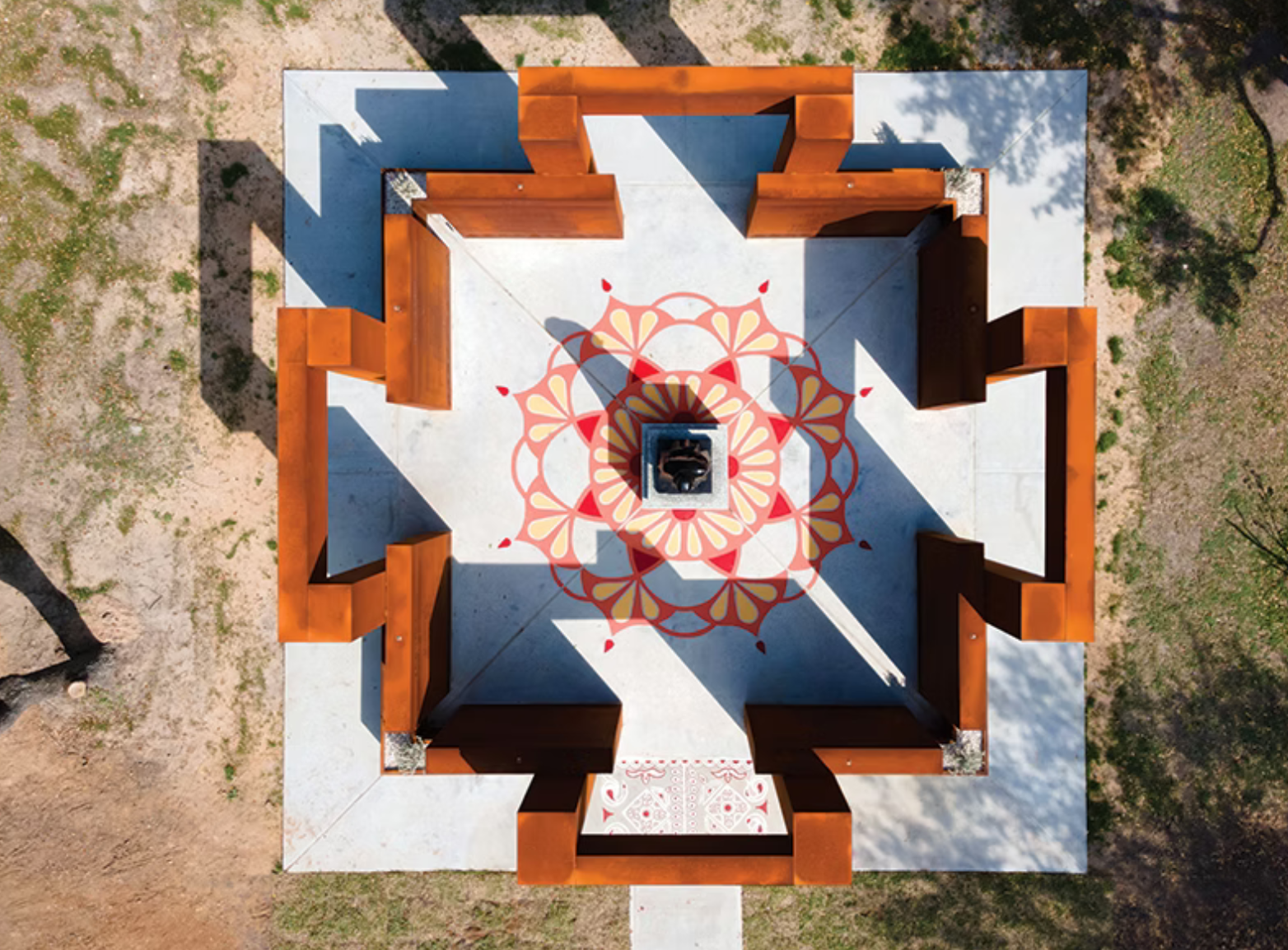
Houston is often celebrated as one of the most diverse cities in the United States. Its cultural landscape reflects that diversity in countless ways. Languages overlap in neighborhood grocery stores. Festivals fill parks throughout the year. Restaurants preserve family histories as much as recipes, while places of worship, businesses, and community organizations continue to shape the city’s identity. According to the Kinder Institute, more than 650,000 people of Asian descent live across the Houston metropolitan area, making it one of the country’s largest and most diverse Asian populations.
Yet I have found myself wondering whether demographic diversity automatically becomes cultural visibility. A city can be home to hundreds of thousands of people who share a cultural heritage and still struggle to make their artistic contributions visible. That question has stayed with me as I’ve spent more time meeting artists, visiting exhibitions, and thinking about the role South Asian art plays within Houston’s broader cultural landscape.
It also made me realize that we often use the phrase art scene without asking what we actually mean by it. At first, the answer seems obvious. A city has artists. Museums collect their work. Galleries exhibit it. Festivals celebrate it. Yet that explanation feels incomplete.
Houston already has remarkable South Asian artists working across painting, sculpture, ceramics, textiles, photography, installation, film, and public art. Their practices are as varied as the communities from which they emerge. Some draw deeply from mythology and ritual, while others explore migration, family history, language, labor, gender, or contemporary politics. Many move comfortably between these subjects because identity itself is rarely experienced through a single lens.
The presence of artists, however, does not automatically create an artistic community. Nor do exhibitions. Nor do institutions. An artistic ecosystem begins to emerge when relationships form between the people who make culture, the people who support it, and the people who encounter it. That distinction may seem subtle, but it changes how we think about cultural development.
Cities often measure the health of their arts sectors through exhibitions, attendance figures, grant funding, acquisitions, or economic impact. These are valuable measures because they tell us something about artistic activity. They tell us much less about the strength of the ecosystem itself. Healthy ecosystems are not built solely through production. They are built through connection.
Artists learn from one another long before they exhibit together. Curators often discover new voices through conversations before they discover them through institutional exhibitions. Collectors develop confidence not simply by purchasing artwork, but by spending time with artists, visiting studios, and understanding how creative practices evolve. Students find mentors. Communities begin to recognize artists not only as individuals, but as contributors to the cultural identity of the city.
These relationships rarely develop overnight. They are built through repeated encounters, shared experiences, and sustained investment in one another’s work. Over time, they become the invisible infrastructure that allows an artistic community to mature. This is one of the reasons art occupies such an important place within culture.
Art allows communities to explore questions that rarely have simple answers. How does memory survive migration? What do we inherit, and what do we choose to reinvent? How do multiple generations understand the same traditions differently? A painting, sculpture, or installation can hold these tensions without forcing them into a single conclusion.
For many South Asian artists, these are not abstract questions. They are lived experiences. The South Asian community in Houston includes families whose histories stretch across India, Pakistan, Bangladesh, Nepal, Sri Lanka, Bhutan, and the wider diaspora. First-generation immigrants, second-generation Houstonians, and recent arrivals often carry different relationships to language, faith, identity, and home. Rather than producing a single artistic tradition, this diversity has given rise to a wide range of creative practices, each contributing a different perspective to the city’s cultural life.
Houston already possesses many of the institutions that make artistic communities possible. The Museum of Fine Arts, Houston has developed one of the country’s most significant collections of Asian art. Asia Society Texas has expanded opportunities to engage with contemporary Asian artists and ideas. The Houston Arts Alliance continues to support artists and public programming throughout the region, while numerous artist-run organizations have created spaces for experimentation and dialogue.
Each of these organizations contributes something essential. Museums preserve and interpret culture. Universities educate artists and scholars. Arts organizations provide funding and advocacy. Commercial galleries develop artists’ careers. Artist-run initiatives create opportunities for experimentation and community building.
The strength of an ecosystem depends not on one institution doing everything well, but on many organizations performing different roles while strengthening one another. This is why I think the conversation has to move beyond representation. Representation remains important. It matters whose work is exhibited, collected, written about, and preserved. But visibility alone cannot sustain an artistic community. Artists also need thoughtful curation, critical dialogue, mentorship, professional development, collectors who invest in their practices, and communities that continue returning long after a single exhibition has ended.
Supporting South Asian art, then, is about more than increasing the number of exhibitions. It is about creating the conditions in which artists can build lasting practices, where collectors feel confident engaging with contemporary work, and where communities begin to see these artists not as occasional representatives of a culture but as integral contributors to Houston’s artistic identity. This is one of the questions that continues to shape the work of House of Devi.
Our interest has never been simply in organizing exhibitions or events. It is in contributing to an ecosystem where artists, collectors, curators, scholars, and communities become more connected over time. We see our work as one contribution within a much larger cultural landscape—one that has been shaped by many organizations before us and will continue to evolve through the efforts of many others.
The question, then, is not whether Houston has South Asian art. It clearly does. The more interesting question is how we continue building the relationships that allow that artistic community to flourish.
Those relationships will not be created by any single exhibition, organization, or institution. They will be built gradually, through conversation, collaboration, curiosity, and the shared belief that art is not only something we experience, but something through which communities come to better understand themselves.
Have thoughts on this piece?
Start a conversation