Ami Mehta: The Things We Carry
Ami Mehta explores migration, belonging, and generational memory through layered materials and carefully constructed works.
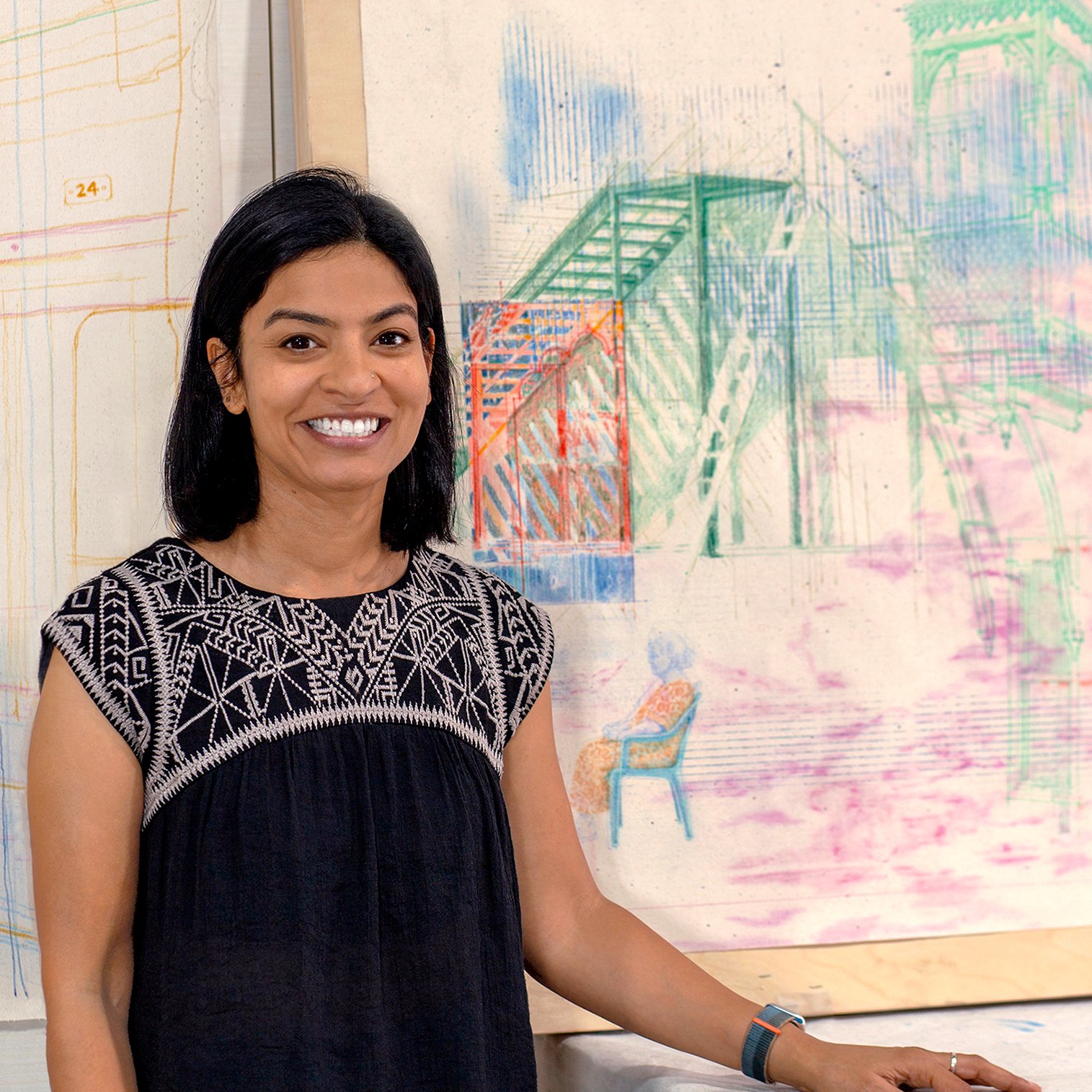
Ami Mehta: The Things We Carry
What makes a place feel like home? Sometimes it is the light coming through a window, the texture of a wall, or the familiar shape of a dress. Sometimes it is a memory that becomes clearer only after we have left. In our recent conversation with Ami Mehta, these small, familiar details opened into larger questions about migration, belonging, women’s labor, and what we choose to preserve. Her work gives these questions a physical form through drawing, layered materials, and carefully constructed presentations that invite a closer look. As we prepare to share her work with House of Devi at Affordable Art Fair Houston, we wanted to introduce the thinking and care behind it.
Home Beyond an Address
In Bridge, Ami considers how the spaces we inhabit shape our sense of belonging. Architecture carries more than its dimensions. The scale of a room, the quality of its light, and the surfaces around us become part of how we recognize home. Migration changes our relationship to those details. A new place may offer opportunity while feeling unfamiliar in ways that are difficult to explain. Ami’s work makes room for that experience: the distance between living somewhere and feeling that we belong there. Breath Held approaches related questions through staircases, ladders, and the relationships between places people leave and places they move toward. These forms suggest movement, but also the uncertainty that can accompany it. One deliberate choice is her use of everyday house dresses. Their familiar shapes allow the work to connect across cultures while holding space for the domestic lives of women. They bring attention to the ordinary clothing worn while cooking, cleaning, caring for others, and keeping a household moving.
Paying Attention to What Gets Overlooked
Our conversation returned often to women’s labor and the strength required to sustain families. Much of that work happens quietly. It is repeated every day, relied upon by everyone, and rarely given the same attention as more visible achievements. That attention to overlooked lives also runs through Only Sing of Floods. In discussing the work and its accompanying poem, Ami explored rivers, ecological cycles, and the losses that can disappear beneath larger public narratives. A tree element carved six years earlier eventually found its place in this piece. That detail offers a glimpse into her process. A material or form can remain with her for years before its relationship to a new work becomes clear.
Giving Memory a Physical Form
A Record of Repair considers generational memory and the effort involved in keeping it alive. The conversation around this piece moved through recollections of Mumbai and kite flying during Uttarayan, asking how experiences pass between generations and what happens as their details begin to fade. The work’s presentation is part of that inquiry. Rather than stretching every piece into a conventional canvas format, Ami uses large pins to suspend certain works within their frames. They take on the presence of preserved specimens or heirloom objects—things held carefully because they carry a history. There is considerable work behind that effect. Custom framing, mounting, and attention to structural integrity can add roughly fifteen hours to a piece. The frame participates in how we encounter the artwork, giving its materials room to sit, float, and be examined.
A Practice That Keeps Evolving
Alongside these narrative works, Ami creates contemporary abstractions for commercial settings, including hotels and restaurants. Her move from alcohol inks on paper to aluminum panels grew out of practical experimentation: she needed a surface that could support repeated layering without breaking down. Across these different parts of her practice, materials help her work through an idea. She builds, revisits, and adjusts until the physical form can carry what she wants to express. At House of Devi, we are drawn to the way Ami gives everyday details sustained attention. A dress, a staircase, a tree, or a remembered room can hold an entire history. Her work invites us to spend time with those details—and consider the ones we carry ourselves. Visit House of Devi at Affordable Art Fair Houston, October 15–18, 2026, at the George R. Brown Convention Center. Find us at Booth A4 to explore work by Ami Mehta, Sneha Bhavsar, Jigna Patel, and Purvi Shah.
Have thoughts on this piece?
Start a conversation